This essay was originally part of a larger body of thesis work on the relation of the Gothic Tradition to the Poetry of Sylvia Plath and Anne Sexton.
With any extended discussion of death, questions of the spiritual are bound to arise. The political rage of punk decried organized religion as a cause of unnecessary death, as evidenced by songs like “Religious Wars” by the Subhumans (UK). “Atheist Peace” by Bad Religion shows where punk found solace against its injustices, but the spiritual underpinnings of Goth have a longer and more complicated lineage. While much of the traditional Gothic architecture and literature was created from a Christian point-of-view, the genre’s god-fearing perspective has been eschewed and inverted in contemporary Gothic art and culture. An “aversion to Christian values,” being another facet of what defines modern Goth, can be found in the post-punk music that spurred its subcultural flourishing. Joy Division lambasted the conformity and “Daddy”-esque need for a patriarch in “Colony” off their final album Closer. Robert Smith has revisited his negative associations with his Christian upbringing several times. “The Holy Hour” and “Faith” off the 1981 album of the same name feature a protagonist who remains empty handed after seeking the promise of God’s salvation. “The Blood” from The Head on the Door shows a cynical reflection on the hypocrisy of Christian good/evil morality.
These sentiments are echoed in the subculture that stemmed from their music. Satanic iconography has become a staple of Gothic fashion, with pentagrams and inverted crosses adorning pants and pendants alike. The image of the vampire violently hissing at a cross, such that we see from Ingrid Pitt in Countess Dracula, being emulated on the dance floor or being projected as the speaker in Smith’s lyrics, is another such extension. Ultimately, the music and aesthetics of the culture which demonstrate its aversion to Christian values serve to undermine the discursive modes of power that have sprawled into every facet of life. As Christianity was central to the development of these pervasive power hierarchies (Foucault 141), its hissing at creates a subcultural space behind the shadows of the discursive power apparatus. Most importantly for the development modern notions of the Gothic is how that resistance is manifested into new and alternative spirituality. A spirituality that encourages the practitioner to engage in shadow-work and explore gender and sexuality in ways that have been historically oppressed by the Christian Church. Siouxsie Sioux is the central figure in this development, bewitching audience members to reclaim and further Pagan practices in and of the present day. As progenitors of the Banshees and the post-punk scene they belonged to, we see the first inklings of the genre’s spiritual dimension in the poetry of Anne Sexton and Sylvia Plath.
Spiritual Reclamation in Gothic Poetry
Despite being evident from the beginning of her career, the spiritual component of Sexton’s writing has been overlooked because of its rigid classification as “confessional.” “Confessional” implies a post-Darwin materialism detached from matters of the spiritual. In bolstering the hierarchies of coercive power present in emphasizing psychiatric discourse, discussions of “confessionality” also unknowingly preclude how questions of the spiritual intersect with gender and queerness. Spiritual themes occur often in Sexton, whether the divine feminine in “Moon Song, Woman Song,” or the retelling of spiritually significant myths and folktales in her Transformations collection. However, the most crystalline concatenation of these ideas is made evident in another of her early masterpieces, “Her Kind” from 1960.
From the poem’s very first line, Sexton confronts the reader with images of the spiritual: “I have gone out, a possessed witch.” By conversing with the practice of witchcraft, the rest of the poem is colored by a spiritual presence. The word choice of “possessed” conjures an image of the “witch” that is rooted in Christian reconstructions of witchcraft as evil. The “possessed witch” speaks to the ideologies that equated the practice of witchcraft to devil worship in works such as the Malleus Maleficarum by Heinrich Kramer. Sexton later expands upon this by stating the speaker of the poem is “dreaming evil” (3). This shows the speaker owning and embracing the concept of evil, in a way that would have been seen as immoral in Romantic times, wherein much of the traditional canon of Gothic literature was produced. This ownership of evil displays a resistance to Christian modes of power that were instrumental in the establishment of futurism, coercive discourses of mental illness and traditional gender roles, as well as, industrialism, capitalism and bourgeois society (Foucault 141). The speaker’s owning of evil can also be seen as a statement of gendered resistance when the history of witchcraft is examined as its association to devil worship was used by the Church to suppress women’s rights. This culminated in the European Witch Trials, a series of events that resulted in the death and torture of thousands of women. The “evil witch” image, although not based in any traditional magical practices, has recently been reclaimed by contemporary witches and Pagans as a way of weaponizing feminist attitudes. This same trajectory of reclamation is mirrored in Sexton’s poem.
She continues her use of spiritual gothic imagery in the next line, “haunting the black air, braver at night” (2). This image presents an allusion to the Babayaga from Russian folklore. Although she was originally seen as a villain in the Russian folktales from which she originates, she has since become a symbol of female empowerment, much the same way other mythological figures like Medusa have. The Babayaga is known for being traditionally “ugly,” and is the embodiment of a disfigured feminine form, an archetype that recurs in the poetry of both Sexton and Plath. Although the Babayaga never would have been “worshipped” in Pagan times, her place in mythology figures her as an empowered contemporary spiritual force, again like Medusa. Her disfigured femininity is an emblem of resistance to Western beauty standards that were developed and enforced by the Christian Church. It also presents an invitation to androgyny and queerness, categories that have the same lineage of oppression, in much the same way that the Creature from Mary Shelley’s Frankenstein has become a queer symbol in the centuries following its publication.
We can see this invitation most evidently in the poem’s use of diction throughout the second stanza. The word choice of “disaligned” and “misunderstood” in the lines “whining, rearranging the disaligned / A woman like that is misunderstood” (Sexton lines 12-13) is particularly of note here. Although “rearranging the disaligned” might ostensibly seem like a straightforward reference to the “skillets, carvings, [and] shelves” (Sexton 9) earlier in the stanza, a further analysis shows that there is actually a dual meaning. “Disaligned” can also be read as personification, the speaker referring to the “worms and the elves” (Sexton 11) as figures who are “disaligned” like herself. By “rearranging the disaligned,” she is seemingly bringing all the disaligned figures together and finding common ground with them. This is significant because gender dysphoria is often described as a “misalignment” one feels with the body they were assigned at birth. The descriptor of “disaligned,” then, accurately speaks to the lived transgender experience. “The worms and the elves” are stand-ins for queer people who are “misunderstood” by society. A queer reading of this section of the poem takes the feminist framework of the “witch woman” a step further in having the speaker’s audience be all those who face oppression under patriarchy. This is important for viewing “Her Kind” as an example of modern Gothic Art because gender variation critically intersects with spiritual frameworks in contemporary goth subculture. Sexton’s invitation to queerness gives her poem a genderfluidity that is characteristic of our modern understandings of the term.
Sexton’s poem both redefines the image of the witch in aesthetics of Gothicism, while simultaneously configuring her as a symbol of feminine and queer empowerment. It puts forth a spiritual perspective that allows for shadow-work and aligns such practices closer to the death drive than they perhaps ever truly were in Pagan societies. The poem’s spirituality undermines the privileged power hierarchies of Christian-influenced psychiatry as evidenced through centuries of persecution of the “evil Other.” Through its theoretical trajectory and acquaintance with death, it posits a cyclical view of death and time opposed to the linearity of Christian spirituality and all the emanations of power that stem from it. Intertwining witchcraft with her fascination with death and darkness, Sexton makes strides towards reclaiming the image of the witch while not hearkening back to an idealized past. By using those very same images and aesthetics that were originally applied to witchcraft to suppress it, Sexton is able to progress the spiritual lineage of the craft by articulating a version that is decidedly modern and Gothic. The association of witchcraft to the Gothic would be later compounded by the post-punk bands that followed
Plath and the Spiritual Gothic
One of the most important poems of Sexton’s early career is paralleled by one of Plath’s early masterpieces, “The Disquieting Muses,” also from 1960. Although ostensibly based on the de Chirico painting of the same name, thematically the poem has much more in common with “Her Kind.” It starts with an apostrophe to a “Mother, mother” (Plath line 1) figure, an invocation that repeats throughout. Much like how “Her Kind’s” reference to a “possessed witch” in its first line sets the spiritual tone for the rest of the piece, “The Disquieting Muses’” beginning image of the divine feminine, delivered in a tone that echoes Pagan cries to mother deities like Diana and Brigit, makes it clear that divorcing the poem from its spiritual template in favor of a “confessional” reading is reductionist and narrow sighted.
The divine feminine is followed by images of an “illbred aunt” and a “disfigured and unsightly Cousin” (1-3). Here we see Plath setting up a disfigured feminine form much like that of the Babayaga or Sexton’s “possessed witch” This correlation is only made more evident in the second stanza which brings “witches… those three ladies / Nodding by night around my bed, / Mouthless, eyeless, with stitched bald head” (11, 14-16). The image of the “witch,” symbolizing the disfigured feminine as it stands in contrast to “christening” (4) ideals of womanhood, appears not just in these two poems, but throughout the work of both authors. There is the “daunted witch” (8) in Plath’s “Conversation Among the Ruins” and the “witch’s garden” of “Mother Gothel” (246-247) in Sexton’s retelling of “Rapunzel” as part of her Transformations series. The “three ladies” specifically allude to the Fates and the Maiden-Mother-Crone trinity, much like Sexton’s allusion to the Babayaga. Their “bald head” presents an image of androgyny placed within the darkness of “night around my bed.” Baldness is a physical presentation that is often seen as masculine, yet it is here being ascribed to the female form coated in imagery of Gothic horror fiction. Because of these images of darkened gender variation, the poem has the same two-pronged effect of Sexton’s, offering an invitation to queerness in the reader and a defanging of the traditional gender roles of the nuclear family era Sexton and Plath were marked rebels against.
In the last stanza of the poem, Plath pictures the witches “in gowns of stone” (76). This gives the audience another androgynous image having a dress, a traditional symbol of feminine chastity, composed of a tough masculine material like stone. It masculinizes preconceived notions of how women are supposed to act and dress. At the poem’s end, the speaker declares “no frown of mine / Will betray the company I keep” (76). The speaker is stating she would rather be among the disfigured. Similar to “not a woman quite,” there is a sadness in this sentiment because it means alienation from societal acceptance, a feeling relevant to “disfigured” queer readers, echoing the sentiment of Shelley’s Creation above the Village of Chamounix. However, an underlying empowerment can also be found because it expresses the same “concerted resistance” to the discursive power apparatus’s imposed rigidity of gender that has become characteristic of contemporary Gothic culture.
While the poems Plath wrote in the last months of her life are largely considered to be her darkest and most haunting works, “The Disquieting Muses” shows that these characteristics were still present at the beginning of her career. By offering images of Pagan archetypes in the darkness of night as the poem’s speaker is in her bed, it sets the spiritual queerness of the text within a brooding Gothic darkness. Such a darkness, aligns the poem’s following of pre-Christian figures to an arena where shadow confrontation can occur and the death drive looms near. It shows how not only Gothic art, but a new Gothic spirituality, through defining said spirituality, attacks hierarchical discourses of power. The link between queerness, the Gothic, Paganism and mental health are intersected and made evident in the poetry of both Plath and Sexton.
The Spiritual Backdrop of Post-Punk
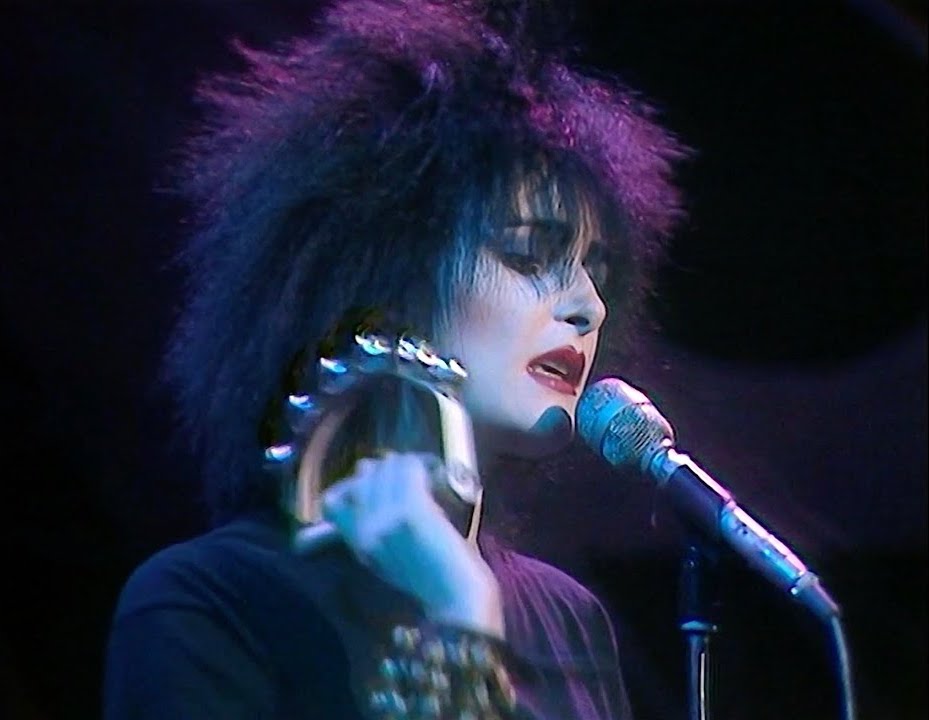
“Following the footsteps of a rag doll dance, we’re entranced, spellbound” shouts Siouxsie Sioux in the Banshees’ most famous song and one of the eternal anthems of modern Goth culture. The opening track off their iconically spooky Juju from 1981, “Spellbound’s” prominence as a staple at goth nights, having a guitar riff that has been copied ad nauseum and the enduring image of the track’s singer, demands attention be payed to the spiritual presence within the genre. As an Instagram reel by the Rock ’n Doll Store explaining “What Your Goth GF’s Favorite Band Says About Her” says: “Siouxsie and the Banshees – she’s into witchcraft.” While Joy Division and The Cure paved the way for the need to explore such a spirituality by foregrounding anti-Christian sentiments, it wasn’t until the Banshees that witchcraft came to be incorporated into modern Goth subculture.
The lyrical content of the song is fantastic and largely an invention of its author, bassist Steve Severin. Its scenes of occultish horror fiction not attempting to have any basis in the historical practice of witches. However, this is in and of itself notable as it shows an emphasis on the marriage of Gothic horror fiction with the optics of witchcraft. Siouxsie Sioux, birthname Susan Ballion, emphasizes this in her recounting of the group’s origin “I played him [guitarist John McKay] the soundtracks from Psycho and The Omen and told him that was the sound we wanted” (qtd. in Mueller). Considering this conscious influence from horror and a doubling down on her witch persona, the aesthetic landscape of Siouxsie and the Banshees provided a spiritual backdrop for synthesizing witchcraft and Gothicism. Whereas Stevie Nicks was chastised and fearmongered for having a cautiously witchy image in Fleetwood Mac, Siouxsie Sioux was the first to fully lean into and embrace it. Despite the song’s title and central conceit being one of spellcasting, a common practice across many different strains of pre-Christian religion, the biggest insinuation of its romance with witchcraft comes in the second verse.
“And don’t forget when your elders forget
To say their prayers
Take them by the legs
And throw them down the stairs”
(Ballion et al).
This section of the song being a reference to an English nursery rhyme called “Goosey Goosey Gander:”
“There I met an old man
Who wouldn’t say his prayers
So I took him by his left leg
And threw him down the stairs”
(Opie and Opie).
The reference is significant. It’s vivid scene of abrupt violence despite being a rhyme for children reflects the “shadows” that always lurk in the background of the world, only visible to Esther Greenwood and Siouxsie Sioux, yet still present to others. More importantly though, “Goosey Goosey Gander” holds cultural weight as an emblem of religious persecution. It’s image of throwing an “old man who wouldn’t say his prayers… down the stairs” serving as a metaphor for the blood-soaked sword of the Christian Church. Recalling centuries of persecution and witch trials, Siouxsie inverts the perspective of the speaker. She is now speaking to an audience of other witches, commanding them to throw those who have persecuted and suppressed them for hundreds of years down the stairs. Nearly 500 years after its publication, the legacy of the Malleus Maleficarum received its ultimate subversion in the form of a post-punk anthem.
Furthering Siouxsie Sioux’s leaning into witchcraft is “Green Fingers” from Juju’s follow-up, A Kiss in the Dreamhouse (1982). The idea for the song was lifted from an episode of Rod Serling’s Night Gallery, the reasons for its appropriation within the Banshees being an obvious allusion to Sioux’s perceived witch image and her tying it to horror fiction. The opening lines, “Hibiscus head/In a flower bed” (Ballion) lures the listener into the witch’s garden. Cleverly, the rhyming of “head” with “flower bed” layers the imagery of the lyrics so that it operates on two levels. Now inadvertently conjuring an image of a flower crown, the words suggest a symbol of the May Queen and the witch’s jouissance.
The song’s successive chorus makes the ultimate proclamation of its spiritual connotations:
“Magic in her hands
She could make anything grow
Magic in her hands
She had green fingers”
(Ballion).
Such an affirmation of the practices of green witchcraft serves to make the song somewhat of a rallying cry for witches and Pagans. The spiritual channeling through the “magic in her hands” that enables the witch to “make anything grow” strikes the listener in its empowerment. The reference to a “mandrake rooted deep into the soil” (Ballion) in the second verse recalls another occult symbol that has come to be associated with witchcraft. Importantly, Siouxsie Sioux’s imagistic constructions of the flower crown and mandrake root reposition them as Gothic symbols. Because the words are coming from the Gothmother herself, it makes those images just as “Gothic” as the bat, ankh or spiderweb. The images of the witch become the images of the Gothic.
While notably less dark than “Spellbound,” “Green Fingers’” lineage stemming from a piece of horror fiction, while at the same time esteeming light magick, performs the same situating of alternative spirituality within the contemporary Gothic. Functionally, it serves to connect all the theoretical dots that the Banshees followed from Sexton and Plath. It makes the listener feel how empowering witchcraft as a practice can be, particularly to listeners of feminine and queer backgrounds. Through horror, it connects those practices with the shadow realm and brings them closer to the death drive.
Conclusion
In a scene from Elvira: Mistress of the Dark, the titular character crashes the “Fallwell Morality Club and Picnic,” with a self-concocted aphrodisiac witches brew. The townspeople attempt to burn her at the stake at the film’s end, but she uses a magical ring from her great-aunt Morgana to quell the flames. The third act of Elvira is a microcosm of the history of association between spirituality and Gothicism: the invention of Satanic optics to subjugate witches and provide justification for their persecution, the eventual reclamation of those images, using this new Gothic form of witchcraft as a negation of life to subvert Christian heteronormative bodies and morality, as well as a vehicle for shadow confrontation. Much like the history of Gothic art writ large, this process of spiritual reclamation takes a critical, yet often overlooked step in the poetry of Anne Sexton and Sylvia Plath. Their marriage of witchcraft to the Gothic as a way to defang the gender roles of the nuclear family provided a template for those subversive practices to take their pop culture iconography in the figureheads of Siouxsie Sioux and Elvira.
 Fourth Dominion